Cute Monster Band
- 4.5
- Rating
- 1.00M
- Installs
- Free
- Price

 Analysis by App-foxy
Some music games ask me to follow a beat, while others turn music-making into a collection of menus and settings. Cute Monster Band takes a more playful route: I mix amusing little characters and watch the resulting combinations form looping musical patterns. That simple idea makes it easy to approach, especially when I want something light to do rather than a demanding rhythm challenge.
After spending time with it, I see the appeal clearly. The game is built around experimenting with character combinations, listening to how the pieces fit together, and gradually finding loops that feel satisfying. It is less about performing a song perfectly and more about arranging a small, animated sound world. That makes it a natural fit for short sessions, casual players, and anyone who enjoys cute presentation with an audible reward for trying different combinations.
At the same time, I would not recommend it to everyone. Players looking for deep composition tools, a conventional rhythm-game campaign, or a competitive leaderboard experience may find the concept too limited. Its strongest quality is its relaxed, toy-like experimentation. Whether that is enough for you depends on what you expect from a music game.
You May Also Like

 Blood Strike: 2.5 Anniversary
Blood Strike’s Loadouts Turn Every Drop Into a Tactical Gamble
A close look at Blood Strike’s custom loadouts: how fast access to signature weapons reshapes its battle royale rhythm, rewards preparation, and narrows the gap between fights.

 Pandora - Music & Podcasts
Pandora’s Music Is Easy to Start, but Harder to Recover
Pandora’s strength is its low-effort path from a seed to a station. Its weak spot is how much confidence it asks you to place in connection, setup, and quiet recovery.

 8 Ball Pool
 Is Built on Rivalries, Rematches, and Routine
A close look at the rivalries, rematches, shared routines, and unanswered safety questions that turn a quick pool match into a persistent mobile community.

 Samsung Music
’s Quiet Strength Is Playing What You Already Own
Its reach comes less from spectacle than from dependable access to a personal library. That simplicity is both the app’s strongest retention engine and its ceiling.

 AccuWeather: Weather Radar
AccuWeather Review: A Quick, Clear Forecast for Everyday Decisions
For everyday plans, the best forecast is the one you can understand quickly. AccuWeather makes rain timing, radar, and local conditions easy to act on, with a few trade-offs.

 Hill Climb Racing
Why Hill Climb Racing Still Turns Crashes Into One More Run
A tiny car, a bumpy hill and one more upgrade: Hill Climb Racing keeps resurfacing because its simple chaos makes every near-miss feel personal.
More From Our News Desk



How the character-mixing idea works in practice
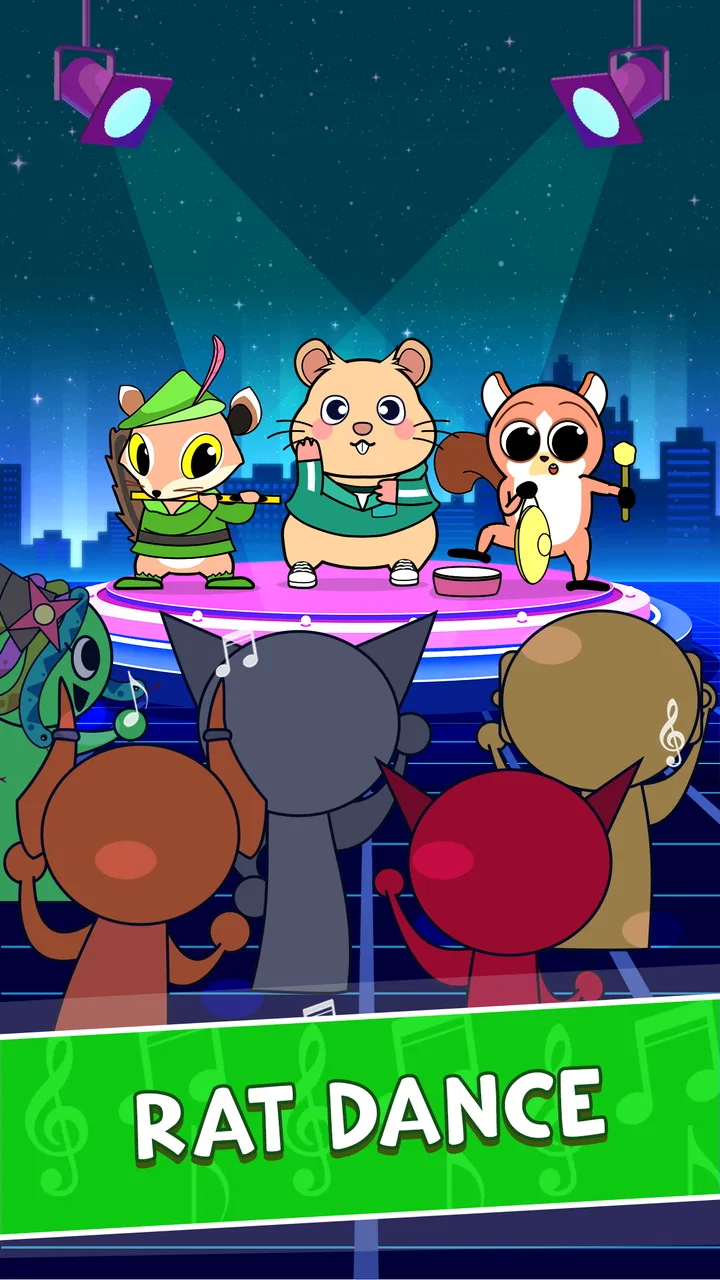
The central attraction is the relationship between the characters and the sound they contribute. Instead of treating music as a fixed track that I merely react to, the game encourages me to build a loop by combining visual personalities. The result feels closer to arranging a tiny band than completing a standard song chart.
That distinction matters because it changes the pace. I am not constantly watching a timing line or worrying about missing a note. I can listen, adjust the mix, and decide whether the current combination is pleasing. When a loop works, the reward comes from hearing the pieces settle into a catchy pattern rather than from clearing a difficult section.
The presentation also gives the game its identity. The cute monster theme keeps the mood friendly and makes experimentation feel less technical. I can imagine handing the phone to a younger player and letting them explore without first explaining musical notation or rhythm-game controls. The age rating is Everyone, which matches that approachable tone.
Still, “easy to start” does not automatically mean “interesting forever.” The first few experiments benefit from novelty, but long-term enjoyment depends on whether I personally like revisiting combinations and refining the sound. This is a game I approach as a creative toy, not as a traditional progression-heavy music title.
A good fit for short, low-pressure sessions
One of the most practical strengths is how naturally the concept fits into spare moments. If I have a few minutes while waiting for an appointment, I can open the game, adjust a group of monsters, listen to the loop, and stop without feeling that I abandoned a complicated mission. That is a better match for casual use than games that require a full level or a precise end point.
A realistic everyday use case would be a quiet break after work. I might not have the energy for a competitive rhythm game, but I may still want something interactive. Here, I can try a different character arrangement, compare the mood of the resulting loop with the previous one, and put the phone away when I am satisfied. The activity is more involved than passive listening but less demanding than practicing a difficult song.
Parents should also understand what the game is and is not offering younger players. The friendly style and Everyone rating make it approachable, but the appeal still depends on enjoying repeated musical experimentation. A child who wants a clear story, racing, or action may lose interest quickly. A child who likes cute creatures and making unusual combinations is more likely to connect with it.
Three useful ways to get more from the loops
My first practical tip is to avoid judging a combination immediately. A loop can sound unbalanced when I add a new character, but a short period of listening helps me decide whether the new layer actually improves the whole arrangement. Treating every change as a quick experiment works better than trying to find a perfect result on the first attempt.
Second, I would use a simple comparison habit: change one character at a time rather than rebuilding the entire group after every listen. That makes it easier to identify which contribution changed the mood. It also turns casual play into a small listening exercise, because I begin noticing whether a character adds rhythm, texture, or a more noticeable melodic role.
Third, I would reserve some combinations for different situations. A busier loop may feel entertaining when I am actively playing, while a simpler one may be more comfortable when I am using the game as a calming break. This is a small but useful shift in mindset: the goal does not always have to be the most crowded or energetic arrangement.
These habits are not complicated features hidden behind a menu. They are ways of approaching the core interaction more deliberately. The game gives me a better experience when I listen for relationships between parts instead of tapping through every possible choice as quickly as possible.
Progress, pressure, and the role of spending
The most important purchase detail is straightforward: the game is free to download and includes in-app purchases priced at $2.99 per item. That makes the initial decision easy because I can try the musical concept without paying first. It also means I should decide for myself whether the free experience already provides enough variety before considering any optional spending.
I appreciate that the purchase information is clear enough to establish the basic context, but I would still approach spending carefully. A listed item price tells me what an individual purchase costs; it does not, by itself, explain how often I will want to buy items or how strongly the game may encourage them during progress. I would therefore avoid treating a purchase as necessary until I understand what it changes in my own session-to-session experience.
For a casual player, the safest approach is to play normally first and notice whether enjoyment comes from discovering combinations or from chasing the next unlock. If the fun remains centered on mixing characters, spending may feel unnecessary. If progress begins to feel like a sequence of prompts to obtain more content, I would pause and reassess rather than buying automatically.
This is especially relevant for families. Because the game is rated Everyone and has a playful appearance, a child may not think of an in-game purchase as real spending. Adults should handle purchase controls on the device and explain that free access and optional paid items are separate decisions. The price per item is visible, but the broader effect on a household budget depends on how many purchases someone chooses to make.
Does the game create pressure?
My main concern is not the existence of optional purchases; many free mobile games use that model. The more useful question is whether the game remains enjoyable when I refuse them. Cute Monster Band works best when I can explore at my own pace, so any pressure to buy would weaken the central appeal. A relaxed music toy should not make me feel that I am failing simply because I am playing with the free portion.
I would watch for a few personal warning signs. If I start opening the game mainly to check what I can buy, if I feel pushed to complete a collection rather than enjoy the music, or if I am spending to remove frustration instead of adding genuine fun, I would stop. Those are not claims about a particular system; they are sensible boundaries for any free game with purchasable items.
The trade-off is simple. Free access lowers the barrier to trying the concept, while optional purchases may appeal to players who want to expand their experience. The game is a better value for people who can enjoy experimentation without feeling compelled to own everything. It is a weaker match for anyone who dislikes free-to-play structures on principle.
Fairness compared with other music games
Compared with a conventional rhythm game, this one appears to offer a different kind of fairness. A rhythm title usually tests timing, reaction speed, and consistency. Players can understand why they succeeded or failed because the rules are tied to their input. Cute Monster Band is more exploratory, so the question is not whether I hit every note but whether the arrangement I created feels rewarding.
That can make the game more welcoming, especially for players who find fast charts stressful or who do not enjoy being graded. There is less reason to compare my reflexes with someone else’s. I can focus on sound and character combinations without needing musical training or advanced finger speed.
The downside is that players who want a clear skill ladder may miss the structure of traditional rhythm games. Without a strong emphasis on precision, I may not feel the same sense of mastery that comes from improving a difficult performance. The game’s fairness is therefore tied to its casual design: it avoids some competitive pressure, but it may also provide less measurable challenge.
It also differs from music-making apps that offer instruments, recording, editing, or detailed control over notes. Those tools are better when I want to compose a specific melody or export a polished idea. This game is more immediate and constrained. Its limitation is also its accessibility: I can start making a loop quickly, but I should not expect the control of a full digital audio workstation.
For me, that makes the choice fairly clear. I would pick this game over a demanding rhythm title when I want relaxed discovery. I would choose a dedicated music app when I need precise composition. I would choose a competitive rhythm game when my priority is improving timing and chasing high scores. None of those options replaces the others; they serve different moods.
Who should skip it
I would skip it if I need a large library of licensed songs, detailed performance statistics, or a campaign with a strong narrative. The verified store information presents it as a cute monster game centered on mixing characters and creating loops, so I would not approach it expecting the breadth of a full music platform.
I would also be cautious if collecting every available item is the main reason I play mobile games. The presence of purchases at $2.99 per item can make completion-focused play more expensive than relaxed experimentation, depending on how much content I want. Since the price is attached to individual items, I would set a personal spending limit before turning the game into a collection project.
On the other hand, I think it is worth trying if I enjoy playful sound design but do not want a technical interface. The game’s concept is specific enough to stand apart from ordinary tapping games, and its free entry makes it easy to judge the core loop personally.
What I would check before committing time or money
The game was released on April 12, 2025, and the current version is 1.0.43. It supports devices running Android 6.0 or later, so compatibility is relatively broad for players using older Android hardware. I would still check that my phone has enough room and that the game runs comfortably before making any purchase, particularly if I use an older device.
Its public reception is encouraging without being a guarantee of personal enjoyment: it holds a 4.3 average from around 5.3 thousand ratings and has passed one million installs. Those figures suggest that many players have found the concept appealing, but they cannot tell me whether I will enjoy the repetition, the available musical variety, or the balance between free play and purchases.
I would also keep expectations realistic about the developer, Great Meme Games. The name signals a deliberately humorous identity, which fits the monster theme. I would judge the game on how well the loops remain entertaining rather than expecting the polish or scale associated with a major music publisher.
One question I would ask before installing is whether I want to create music or simply play with musical pieces. If I want the former, I may outgrow the game because its appeal comes from guided combinations rather than unlimited control. If I want the latter, its restrictions may actually help: fewer technical decisions mean I can reach a satisfying result faster.
Another question is whether I am comfortable with the free-to-play model. The game costs nothing to start, but individual in-app items cost $2.99. I would recommend trying the free experience first, deciding what I genuinely enjoy, and only then considering whether a paid item adds enough value to justify the expense.
Finally, I would ask whether I want a game that can sit quietly in the background of my day. This is not necessarily a weakness. Some players want constant goals and escalating difficulty; others want a small interactive activity that does not demand full concentration. Cute Monster Band is more convincing for the second group.
My trust verdict after trying the concept
I come away viewing Cute Monster Band as a pleasant, focused music game rather than an all-purpose entertainment package. Its strongest idea is the way it turns character mixing into a reason to listen. I like that the player can approach the loops experimentally, without the pressure of perfect timing or the technical barrier of a full composition tool.
The free price makes it easy to test, and the Everyone rating supports its friendly presentation. The one clear spending boundary is the $2.99 price attached to each in-app item. I would keep purchases optional in my own use and would be especially careful on a shared family device. The game earns trust more easily when I treat paid content as a choice, not as part of the basic requirement for enjoying the core idea.
Its limitations are equally important. The experience may feel repetitive to players who need constant progression, and it is not a substitute for a serious rhythm game or music-production app. I would not install it expecting a deep competitive system, detailed editing, or a large professional toolkit. I would install it because the monster-based loop building sounds like a charming way to spend short periods of time.
My recommendation is to try it when you want relaxed musical experimentation, not when you want a demanding performance challenge. Give the free experience enough time to see whether changing one character at a time keeps your attention. If you enjoy listening for how each combination changes the mood, the game has a distinctive little appeal. If you quickly start wishing for precise controls, bigger songs, or stronger goals, a conventional rhythm game or dedicated music app will probably serve you better.
FAQs for Cute Monster Band
01What is Cute Monster Band, and what can I expect from the game?
Cute Monster Band is a rhythm-based game where players create and manage a band of adorable monster characters. The game offers vibrant graphics and catchy tunes, allowing players to engage in musical challenges and customization options. Expect an engaging mix of strategy and entertainment as you level up your band.
02Is Cute Monster Band available for both Android and iOS devices?
Yes, Cute Monster Band is available for download on both Android and iOS platforms. You can find it on the Google Play Store for Android devices and the Apple App Store for iOS devices. Ensure your device meets the minimum system requirements for optimal performance.
03Are there in-app purchases in Cute Monster Band?
Cute Monster Band includes in-app purchases that allow players to unlock additional features, costumes, and instruments for their monsters. While the game is free to download, these optional purchases can enhance the gameplay experience. Players can enjoy the core game without spending money, but premium content offers added customization.
04What age group is Cute Monster Band suitable for?
Cute Monster Band is designed for a broad audience, including children and adults who enjoy rhythm games. The game’s colorful graphics and simple controls make it particularly appealing to younger players, but the strategic elements and challenges can engage older users as well. Always check the app’s age rating for more guidance.
05Does Cute Monster Band require an internet connection to play?
Cute Monster Band can be played offline, allowing users to enjoy the game without an internet connection. However, some features, such as downloading new content or participating in online leaderboards, require an internet connection. Playing online can enhance your experience with additional updates and community interactions.
Pros
- Engaging for young children with vibrant colors.
- Simple interface easy for kids to navigate.
- Promotes creativity through music creation.
- No ads
- ensuring a safe environment.
- Offline play available for uninterrupted fun.
Cons
- Limited musical options for older kids.
- Requires storage space for full features.
- No parental controls for screen time.
- Lacks multiplayer or interactive features.
- In-app purchases can be confusing for kids.

Cute Monster Band
Gallery